Quick answer
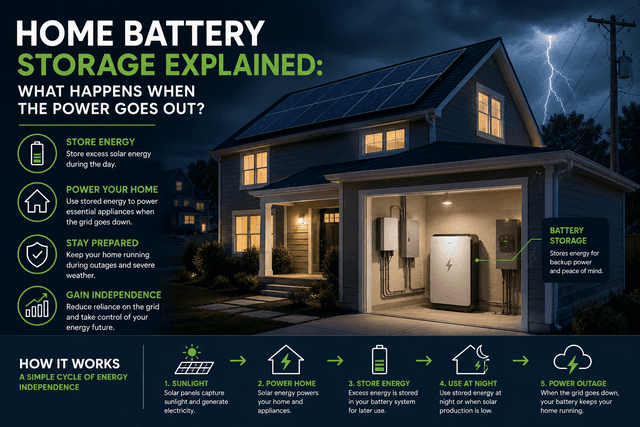
A solar battery stores compatible electricity for later use. When the system is designed and configured for backup, it can power selected home loads during a grid outage. It can also shift some solar electricity into the evening. The right battery setup depends on usable capacity, power output, protected loads, solar production, utility rates and the homeowner’s backup goals.
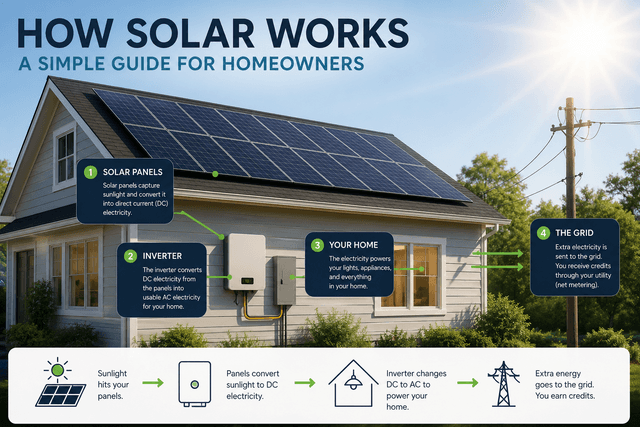
Solar panels and batteries perform different jobs. Panels produce electricity when sunlight is available. A battery stores electricity and releases it later. Pairing the two can make more solar energy available after sunset and provide a local power source when the utility grid is down.
That does not mean every solar-and-battery system powers every circuit for an unlimited time. Backup performance is shaped by how much energy the battery holds, how much power appliances demand and which circuits the system is designed to support.

How solar battery backup works
01
Solar serves the home
Current solar production first helps meet electricity demand in the home.
02
The battery charges
Compatible electricity can charge the battery when production exceeds immediate demand.
03
Stored energy is used later
The battery may discharge after sunset, during higher-rate periods or when backup is needed.
04
Controls manage the flow
The inverter and control equipment direct electricity according to system settings.
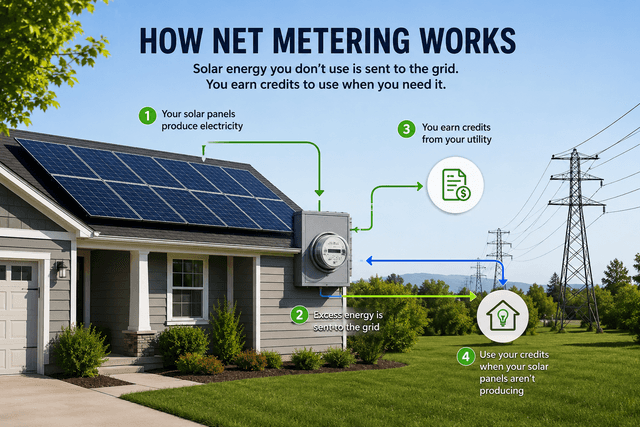
Once the battery is full, additional eligible solar electricity may be exported to the utility grid under the customer’s applicable program. When solar and stored energy cannot meet demand, a grid-connected home can draw electricity from the utility as usual.
The operating order can vary. Some homeowners prioritize a backup reserve, while others use more stored energy each day. Utility programs, equipment capabilities and system settings all influence how the battery charges and discharges.
Why solar panels alone usually do not work during an outage
A typical grid-connected solar system is designed to stop sending electricity when the utility grid goes down. This safety behavior helps prevent the home’s system from energizing utility lines while crews may be repairing them.
Backup requires equipment that can safely separate the home from the grid and create a local source of electricity. A compatible battery, inverter, controls and electrical design work together to support the circuits assigned to backup. Solar panels may then help recharge the battery during daylight if the system supports that operation and enough solar energy is available.
Backup power is a system feature—not a panel feature
Do not assume a home will have outage power simply because it has solar panels or a battery. Confirm that the proposed design includes backup capability, which circuits are protected and how the equipment behaves when the grid is unavailable.
For a deeper outage-preparation checklist, read how to prepare for power outages with solar battery backup.
Four practical benefits of adding battery storage
1. Outage resilience
A properly configured system can keep selected loads running when the grid is down, subject to available battery energy and power.
2. More solar used at home
Energy produced during the day may be stored for evening or overnight household use instead of being exported immediately.
3. Greater control over timing
Where utility rates change by time of day, compatible controls may shift some grid use away from higher-priced periods.
4. Energy monitoring
Many systems let homeowners view solar production, battery charge and household demand in an app or online dashboard.
These benefits are not identical for every home. A battery may provide strong resilience value even where bill savings are modest. In another location, time-varying rates or lower export compensation may make daily energy shifting more important. Review the utility’s current rules before assigning a financial value to stored electricity.
Critical-load backup vs. whole-home backup
Battery systems can be designed to protect a selected group of circuits or a wider portion of the home. The right approach depends on the homeowner’s priorities, the home’s electrical setup and the equipment being considered.
| Design choice | Typical goal | What to verify |
|---|---|---|
| Selected or critical loads | Prioritize items such as refrigeration, lighting, internet and selected outlets | Exact circuits, starting loads, operating limits and load-management rules |
| Broader or whole-home backup | Support more circuits with fewer changes to normal routines | Battery count, output, electrical-service limits and whether large loads must be managed |
“Whole-home backup” does not mean every appliance can run at once or that stored energy cannot be depleted. Central air conditioning, electric resistance heat, well pumps, EV chargers and other large loads can draw substantial power. A design should identify which loads are supported and which may be limited during an outage.
What determines how long a solar battery lasts in an outage?
Runtime is not a fixed number. It changes as household demand changes. A battery supporting a refrigerator, a few lights and internet equipment may last much longer than the same battery running heating, cooling or other large electrical loads.
Usable battery capacity
How much stored energy is available for home use.
Household load
How much power supported devices draw and how long they run.
Starting state of charge
How much energy is in the battery when the outage begins.
Solar recharge
Available sunlight, array output and system design during the outage.
Reserve settings
The portion kept available for outages instead of daily use.
Equipment limits
Maximum continuous power, surge capability and system configuration.
A useful backup plan starts with loads, not a generic promise of hours. List the devices and systems that matter most, estimate how long each must operate and ask the installer to model that demand against the proposed battery configuration.
Can a solar battery lower an electric bill?
It may, but savings are not automatic. A battery can store solar electricity for later use, which may reduce electricity purchased from the grid at certain times. Whether that creates meaningful savings depends on the utility rate structure, export-credit value, charging source, operating mode and household-use pattern.
Where imported electricity costs more during peak hours, shifting stored energy into those periods may have value. Where exported solar receives favorable credits, the financial case for storing rather than exporting may be different. Fixed utility charges can also remain even when a battery reduces grid purchases.
Review how net metering and solar credits work, then compare the current utility tariff with the battery’s proposed operating plan. For pricing factors, see what affects home solar battery cost.
Is solar battery backup right for your home?
A battery may be worth closer consideration when outage protection matters, the home experiences recurring grid interruptions, more solar self-consumption is a priority or time-varying utility rates make energy timing important.
Before choosing a system, ask for written answers to these questions:
- Which circuits and appliances will the proposed system support?
- What usable energy capacity and power output will be available?
- Can the solar array recharge the battery while the grid is down?
- How will large loads be limited or managed?
- What backup reserve will be maintained during normal operation?
- How do local utility rules affect charging, exports and bill savings?
- Can storage be added to an existing solar system, and what equipment changes would be required?
- Which battery, inverter, installation and workmanship warranties apply?
Start with the outcome you want
Tell the designer whether your priority is refrigeration and communications, longer coverage for selected circuits, broader home backup, daily energy shifting or a combination. The system should be sized around that goal and the home’s measured electricity use.
Explore Trinity’s solar battery installation options and request a home-specific assessment before relying on a generic battery count or runtime estimate.
The bottom line
Solar battery backup can make stored electricity available after sunset and provide outage support when the complete system is designed for it. The most important questions are not simply whether a home has a battery, but how much usable energy and power it can provide, which loads it protects, whether solar can recharge it during an outage and how utility rules affect everyday use.
A clear design should state those limits in plain language. That gives homeowners a realistic plan for resilience without assuming every appliance will run indefinitely or that every battery will deliver the same financial result.